
September 25, 2026

Today, Google announced that the September 2026 spam update has finished rolling out.
This was the fourth spam update of the year, following the March 2026 spam update, the June 2026 spam update and the August 2026 spam update, and took two weeks to complete, much longer than the previous few.
This was a normal spam update designed to improve Google’s search spam detection systems that target websites in violation of Google’s spam policies, and applied to all languages and locations.
Google releases spam updates periodically, although we’ve definitely seen an increase this year.
Here’s a timeline of spam updates released in the last few years:
Google said that this spam update was different from the previous three, and it’s clear this one has had a big impact on sites - positive and negative.
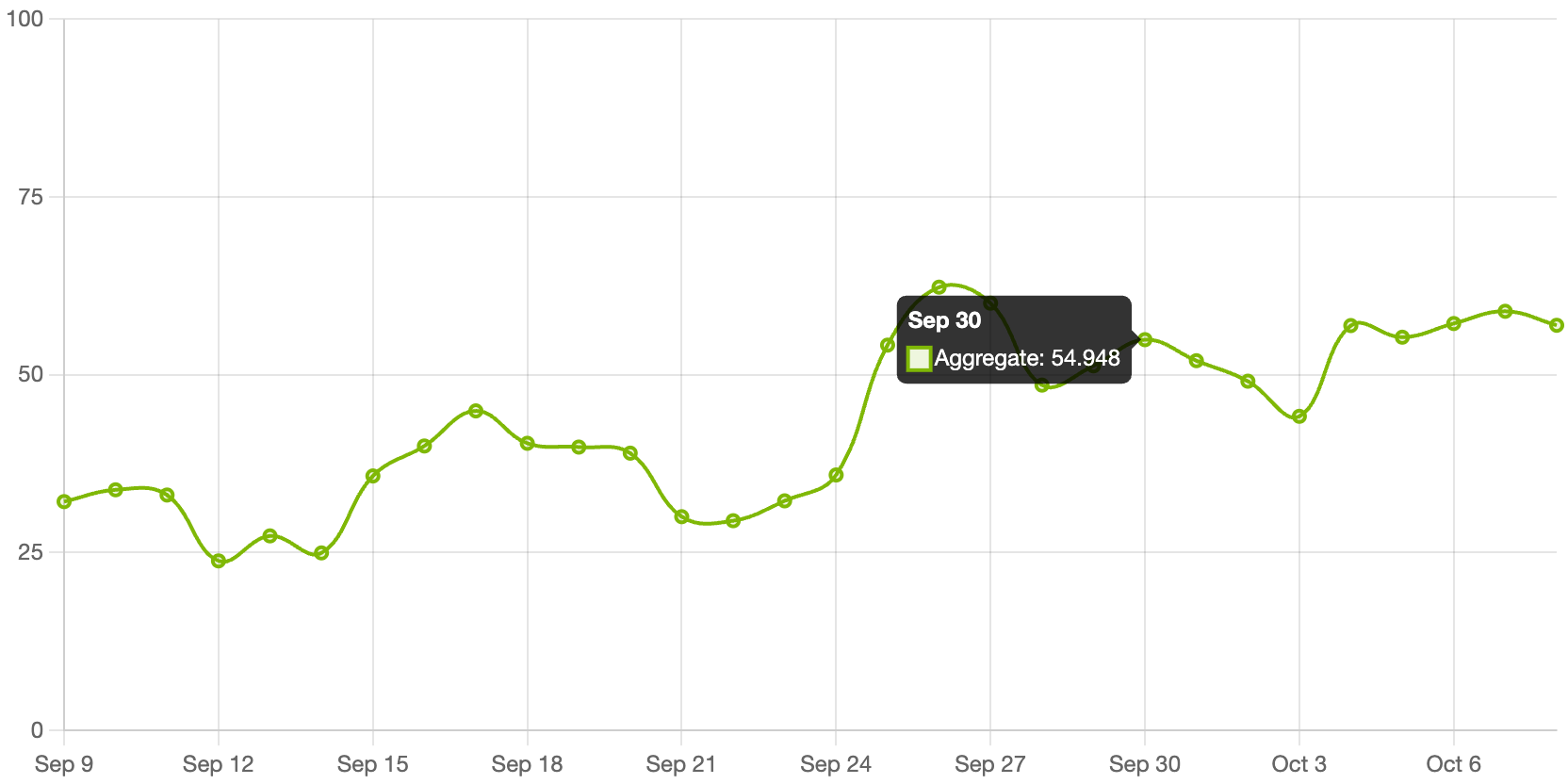
As expected, the search results have been pretty volatile throughout its rollout, with some serious peaks and troughs at certain points within the update’s cycle.
This chart, courtesy of Search Engine Roundtable, shows us volatility over the course of the two weeks:
This update had a pretty big effect on sites all over the world, with many seeing huge dips. SEO and AI Search consultant, Glenn Gabe, documented this on X:
However, quite a few sites, including those impacted by the August 2026 spam update, have finally seen some positive results.
Author and consultant Marie Haynes also posted on X about a number of sites experiencing huge improvements from this update.
Interestingly, there has also been a significant increase in manual actions. Glenn Gabe stated that a lot of site owners have been reaching about these, more so than usual:
As did Marie Haynes:
Schwartz created a graph of manual action complaints over the last few months:
Many SEOs are predicting that a core update will drop soon, and it could be a big one.
Lily Ray also published an article on her prediction, which you can read here.
If you have been hit, there’s a good chance you have violated one or more of Google’s spam policies. We recommend revisiting Google’s documentation, focusing on the policies regarding content, as this was a normal spam update and not a link-specific one, and addressing anything that might be considered spam.
It can take time to recover from a spam update. You need to remove violating content and consistently avoid any spam tactics for several months to get back in Google’s good books. It’s also important to bear in mind that any drops or surges you've seen may be temporary. Wait a little while before evaluating the damage.
If you want expert help with algorithm update recovery, don't hesitate to get in touch with us today.


